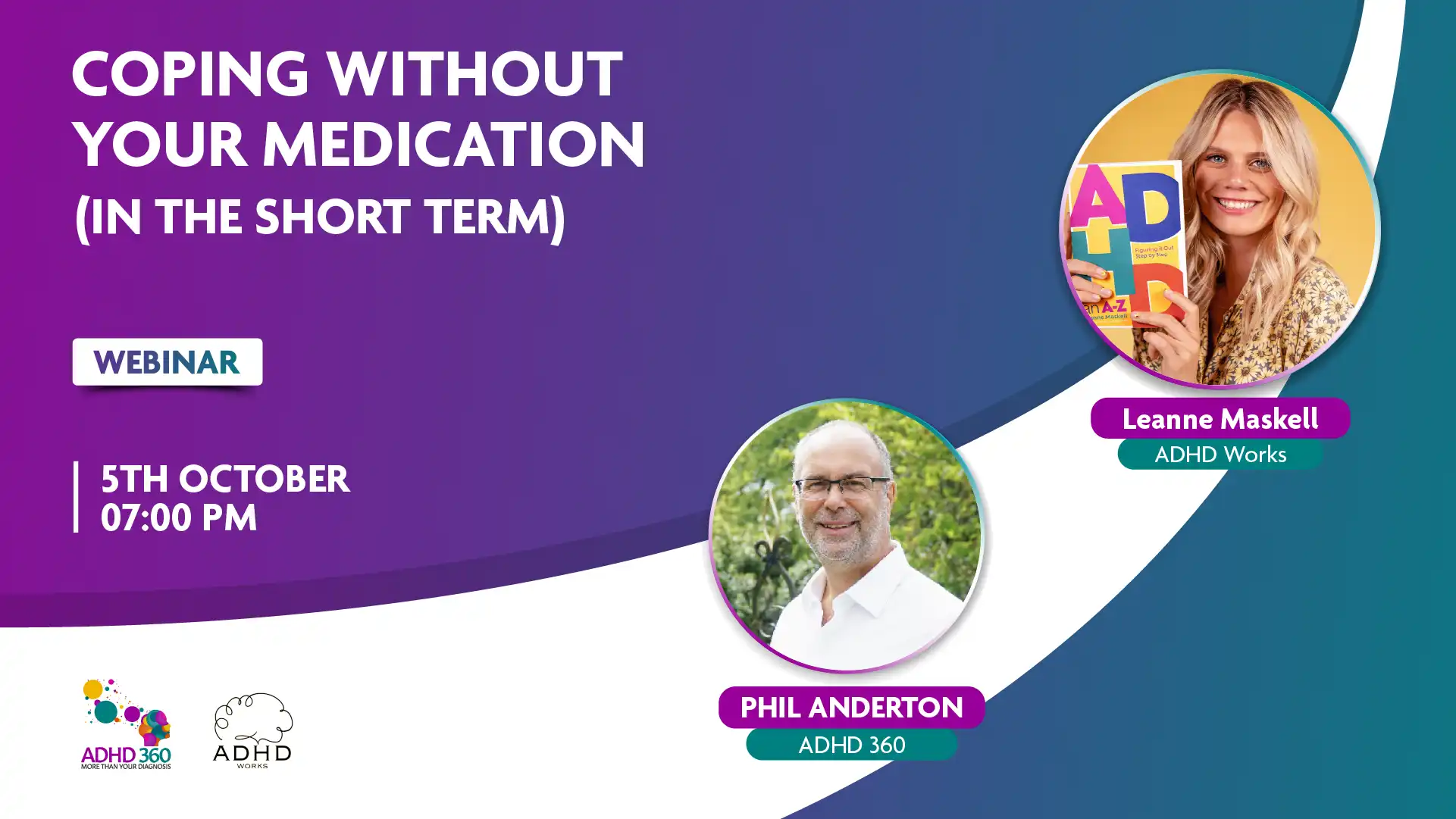
Coping without your medication in the short term
Phil Anderton and Leanne Maskell come together for a free webinar, held 5th October 2023, to discuss how to cope without your medication in the short term due to the recent medication shortages.
ADHD360 mobile & desktop App
Keep yourself and your clinical team up to date with your ADHD symptoms and includes many useful tools.

Key Takeaways
- ✓ Channel Anxiety into Structured Action: Transform feelings of panic and uncertainty into practical steps by utilizing advocacy templates, writing to local representatives, and communicating with employers regarding necessary workplace support.
- ✓ Implement Short-Burst Physical Activity: Engage in high-intensity, short-duration exercise (such as martial arts, brief walks, or quick movement breaks) to stimulate dopamine production and temporarily enhance executive function.
- ✓ Maintain Dosage Consistency and Exercise Caution with Tapering: Avoid abrupt on-and-off cycling over weekends to prevent severe rebound side effects. For non-stimulant medications like Guanfacine, never stop cold turkey; taper doses strictly under clinical guidance to manage blood pressure risks.
- ✓ Document Daily Functioning via Symptoms Journaling: Keep a structured daily record of symptoms, energy levels, and focus shifts (“name it to tame it”) to build self-awareness and gather evidence for workplace accommodation programs (such as Access to Work).
- ✓ Prioritize the Core Treatment Triangle: Focus on foundational health pillars—balanced nutrition, consistent hydration, and adequate sleep—to support neurodivergent brain function during periods of medication supply disruption.
Webinar Transcript
Scope and Context of Global Medication Shortages
Phil Anderton: There is currently an international shortage affecting key ADHD medications. As one of the larger clinical providers in Europe, we consistently provide demand projections to the pharmaceutical industry, yet supply chain disruptions have reached unprecedented global levels. National patient organizations have accurately compared this supply failure to removing physical mobility aids from individuals who require them. Because ADHD is a mental health condition, systemic responses often lack the urgency applied to physical disability support.
Leanne Maskell: Experiencing medication unavailability firsthand at the pharmacy can trigger severe anxiety and panic. For many individuals, optimal treatment provides vital stabilization, preventing life disruption and severe distress. When supply is suddenly interrupted, concerns around job security and daily functioning escalate rapidly. Channeling this initial panic into structured action—such as participating in advocacy petitions, contacting representatives, or using template letters for employers—helps individuals regain agency and address systemic gaps.
Workplace Rights, Accommodation, and Self-Advocacy
Leanne Maskell: Employers often lack guidance on supporting neurodivergent employees facing medication disruptions. Providing structured, clear communication regarding potential performance shifts allows organizations to fulfill their legal duties under disability legislation. In the UK, programs like Access to Work provide funding for specialized ADHD coaching, virtual assistants, and practical workplace adjustments.
Phil Anderton: Under statutory disability protections, such as the Equality Act, requesting reasonable adjustments is a recognized legal right. Simple accommodations—such as taking short, regular movement breaks throughout the workday—can prevent severe burnout and maintain productivity without imposing undue burdens on employers.
Managing Anxiety and Neurobiological Coping Mechanisms
Phil Anderton: When ADHD treatment is interrupted, individuals frequently experience situational anxiety and distress resulting directly from unmanaged cognitive impairments. Channeling hyperfocus into positive routines or self-advocacy offers a constructive release for intense emotions. Shifting focus away from unvetted online forums and toward structured support communities prevents energy depletion and supports psychological resilience.
Leanne Maskell: Implementing daily wellness practices—such as structured physical movement, staying connected with supportive peers, and engaging in brief mindfulness or cognitive exercises—helps mitigate stress. Recognizing personal limits, pacing energy consumption, and avoiding social media overwhelm are essential steps when navigating supply interruptions.
Medication Management, Safe Dosing, and Clinical Guidance
Phil Anderton: Manufacturing disruptions affecting primary suppliers (such as Teva and Takeda for Lisdexamfetamine and Guanfacine) stem from specific production line issues, with recovery timelines estimated across several weeks. Alternative Methylphenidate options and new market entries from suppliers like Flynn Pharma are being integrated to alleviate supply strains. While specialist clinical input is required for switching regimens, immediate-release formulations (such as immediate-release Dexamphetamine or short-acting Methylphenidate) may serve as temporary alternatives under clinical supervision.
Leanne Maskell: Individuals facing supply limits often consider intermittent dosing or rationing. However, irregular self-administration can cause significant physical discomfort and cognitive volatility.
Phil Anderton: Cycling on and off medication over weekends is strongly discouraged. Stopping and restarting abruptly causes physiological stress akin to initial initiation side effects (such as dry mouth, fatigue, and severe rebound symptoms). If stretching supply becomes necessary under clinician advice, maintaining a consistent lower daily dose (for instance, by dissolving capsules like Elvanse in a precise volume of water and taking equal fractions over consecutive days) is clinically preferable to total cessation followed by full-dose restarts.
Tapering Safety Protocols for Non-Stimulant Medications
Phil Anderton: A critical clinical distinction exists regarding non-stimulant medications such as Guanfacine (Intuniv). Guanfacine must never be stopped abruptly due to the risk of severe blood pressure spikes. Patients taking Guanfacine who face supply exhaustion must consult their clinician to establish a gradual tapering schedule while routinely monitoring blood pressure levels.
Short-Burst Exercise and Neurotransmitter Regulation
Leanne Maskell: Physical activity acts as a key non-pharmacological support by stimulating neurotransmitter pathways similar to stimulant medication, albeit for shorter durations. High-engagement activities—such as martial arts, aerial yoga, or structured morning movement—provide vital neurological stimulation.
Phil Anderton: For neurodivergent individuals, short, high-intensity bursts of exertion (such as five minutes on a punch bag, brief basketball drills, or short rapid walks) trigger rapid dopamine release and reset executive focus far more effectively than prolonged, exhausting cardiovascular sessions. Integrating short movement breaks into work routines re-engages cognitive processing and restores operational focus.
Daily Journaling, Self-Awareness, and Foundational Lifestyle Supports
Leanne Maskell: Maintaining a daily symptom and reflection journal (“naming it to tame it”) builds executive self-awareness, allowing individuals to identify specific cognitive challenges and evaluate effective coping strategies. This documentation also provides vital evidence when applying for formal support services or adjusting treatment plans.
Phil Anderton: Long-term coping relies on maintaining the “Treatment Triangle”: balanced nutrition, regular short-burst physical activity, and consistent sleep hygiene. Managing dietary impulsivity, staying hydrated, utilizing tactile tools (such as fidget accessories or chewing gum), and relying on accountable peer relationships provide essential stability until full medication supply is restored.