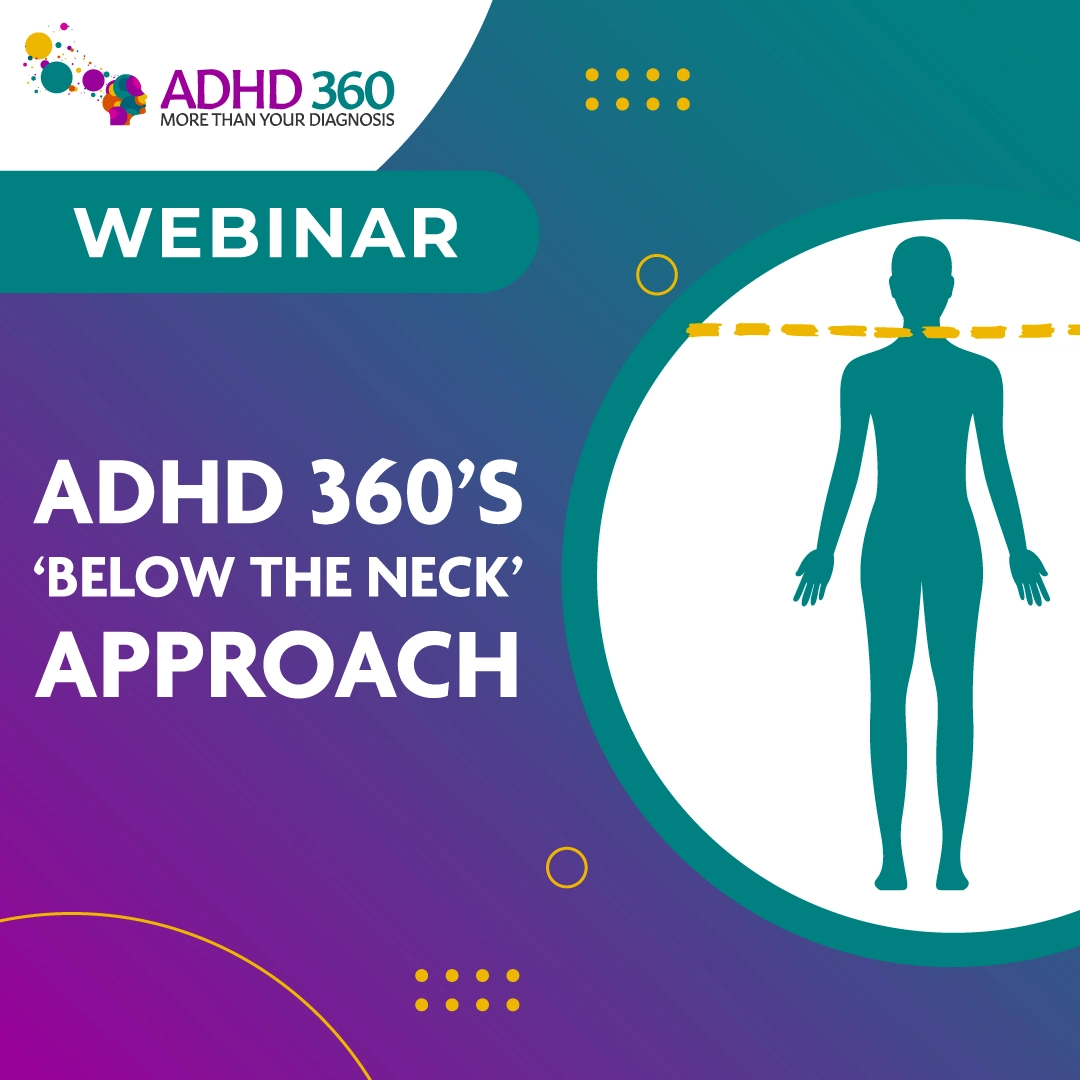
ADHD360's 'below the neck' approach
Phil Anderton, Lisa Mangle and Lisa Collins host a webinar on Thursday 21st March 2024 to discuss why it is important to think below the neck when treating ADHD.
ADHD360 mobile & desktop App
Keep yourself and your clinical team up to date with your ADHD symptoms and includes many useful tools.

Key Takeaways
- ✓ Holistic Health Impact (“ADHD Below the Neck”): Core ADHD symptoms like impulsivity and inattention do not directly reduce life expectancy, but they significantly correlate with lifestyle factors—such as poor nutrition, sedentary behavior, and chronic stress—that elevate risks for cardiovascular disease, type 2 diabetes, and hypertension.
- ✓ Cardiovascular and Metabolic Risk Reduction: Untreated ADHD often leads to erratic eating habits, weight gain, and high blood pressure. Optimizing ADHD treatment helps patients establish structured routines, leading to healthier choices, weight management, and improved cardiovascular markers.
- ✓ Addressing Self-Medication and Substance Misuse: Many individuals turn to alcohol, nicotine, caffeine, or illicit substances to quiet hyperactive thoughts or cope with anxiety. Effective clinical treatment addresses the underlying dopamine deficiency, substantially decreasing reliance on self-medication.
- ✓ Prioritizing Sleep and Daily Well-Being: Chronic sleep disturbances worsen cognitive and physical health. Combining optimized clinical treatment plans with consistent sleep hygiene, stress management, and light daily exercise yields significant improvements in long-term health and quality of life.
- ✓ Actionable Pathway to Care: Patients are encouraged to work closely with specialized clinicians to establish tailored treatment plans, follow medication optimization guidelines, and utilize healthcare access routes like NHS Right to Choose where applicable.
Webinar Transcript
Panel Introduction and Clinical Backgrounds
Phil: Welcome, everyone. Tonight, I am joined by two of my clinical colleagues who share the same first name, so I will refer to them as Lisa C. and Lisa M. Lisa C., would you mind introducing yourself to everyone joining the webinar?
Lisa C.: Hello, my name is Lisa Collins. I am a clinical team leader at ADHD 360. I have been a mental health nurse for about 20 years, spending 12 of those years working in substance misuse and offender health in prison settings, particularly working with female opiate users.
Phil: Thank you, Lisa. And Lisa M., known to many who join our webinars, would you like to introduce yourself?
Lisa M.: My name is Lisa Mangle, one of the founding directors of ADHD 360 alongside Phil. My nursing career began in adult and pediatric care before I transitioned into psychology and ADHD 22 years ago. Throughout my career in research, pharmaceuticals, and clinical practice, I have remained passionate about treating the whole person rather than just focusing on a single diagnosis. Physical well-being, family health, and overall lifestyle are critical components of care.
Defining “ADHD Below the Neck”: Physical Health and Lifespan
Phil: To start our discussion, I want to address an important topic regarding ADHD and overall life expectancy. Research often highlights statistics showing a potential reduction in lifespan—sometimes quoted at up to 13 years—for individuals with untreated or poorly managed ADHD.
When discussing this with psychiatric colleagues like Dr. Rakesh Jain, we explored why this correlation exists. Core DSM-5 criteria such as inattention, hyperactivity, and impulsivity do not directly cause physical harm. However, they strongly correlate with secondary lifestyle factors: poor diet, excess weight, elevated cholesterol, hypertension, and substance misuse. We refer to this broader physical health perspective as “ADHD Below the Neck.” By treating ADHD effectively, we can address these root causes and mitigate these long-term health risks.
Impact on Diet, Weight, and Metabolic Health
Phil: For instance, many individuals with ADHD carry excess weight due to impulsive eating, lack of meal planning, and reliance on fast food. Over time, carrying excess weight increases the risk of type 2 diabetes, elevated cholesterol, and heart disease.
Lisa M.: I recently reviewed a patient who noticed immediate changes after starting treatment. Before medication, she relied on fast food daily because meal planning and grocery shopping felt overwhelming. Once her treatment was optimized, her impulsivity decreased, allowing her to prepare healthy meals at home. Not only did her BMI begin to normalize, but she also saved considerable money previously spent on daily takeout. She hadn’t realized her eating habits were directly connected to untreated ADHD.
Substance Misuse and the Role of Self-Medication
Phil: Lisa Collins, based on your extensive background working in secure healthcare environments, what patterns did you observe regarding substance use and undiagnosed ADHD?
Lisa C.: In offender health, an estimated 25% of the female population had undiagnosed and untreated ADHD. Their lives were often chaotic, involving heavy alcohol or drug use, shoplifting to fund habits, and severe co-occurring health conditions. Many were attempting to self-medicate their symptoms without realizing they had ADHD. When we initiate proper clinical treatment, patients frequently report a dramatic reduction in the urge to self-medicate, leading to significant improvements in stability and mental clarity.
Lisa M.: Most people drink socially, but individuals with untreated ADHD often consume alcohol or nicotine to quiet a hyperactive brain. Once ADHD is treated and dopamine pathways are stabilized, many patients find they no longer rely on alcohol or nicotine to relax.
Case Study: Managing Hypertension Through Effective ADHD Treatment
Lisa M.: We frequently observe physical health markers improving alongside symptom management. I recall a 27-year-old male patient whose initial blood pressure reading was significantly elevated at 180/120 mmHg. Chronic anxiety, poor diet, and stress linked to untreated ADHD were key contributing factors.
Working closely with him, we monitored his readings daily and initiated a structured ADHD treatment plan. Over 12 weeks of titration and optimization, his baseline blood pressure normalized to 120/80 mmHg. Treating his underlying ADHD reduced systemic stress on his body and substantially lowered his long-term risk for cardiovascular events.
Sleep, Anxiety, and Self-Esteem
Lisa C.: Elevated anxiety and poor sleep frequently trigger self-harm, severe psychological distress, or reliance on illicit substances. Addressing core symptoms helps restore emotional regulation and sleep hygiene.
Lisa M.: Low self-esteem impacts nearly 99% of the patients we see. When individuals struggle with daily tasks, social interactions, or work performance, their confidence plummets. Effective treatment allows patients to achieve their potential, building self-esteem and improving overall quality of life across domestic, professional, and social spheres.
The Michigan Model: Five Key Physical Health Focus Areas
Phil: To structure our clinical focus on physical health, we developed the “Michigan Model” in consultation with international experts like Professor Tim Wilens. This framework highlights five major physical health domains influenced by ADHD:
• Alcohol and Substance Abuse: Reducing reliance on substances used for self-medication.
• Diet, Weight, and Diabetes: Promoting structured nutrition and reducing metabolic risks.
• Smoking and Nicotine Cessation: Addressing nicotine dependence and cardiovascular strain.
• Sleep Disruption: Restoring consistent sleep architecture and recovery.
• Hypertension and Cardiovascular Health: Monitoring and lowering blood pressure and systemic stress.
Actionable Strategies: Treatment Plans and Lifestyle Changes
Phil: Education and awareness must be paired with clear, actionable steps. The most important strategy for managing physical health risks associated with ADHD includes:
• Comprehensive Assessment and Diagnosis: Obtain a formal clinical evaluation to identify underlying ADHD.
• Structured Treatment Plan: Work with a specialized clinician to establish a tailored management plan.
• Adherence and Titration: Follow medication and therapeutic guidelines consistently to optimize dopamine regulation.
• Gradual Lifestyle Modifications: Introduce small, sustainable daily changes—such as reducing caffeine, taking daily walks, and establishing regular meal patterns.
Lisa C.: Incorporating regular physical activity, even short 20-minute daily walks, significantly improves mood, boosts natural dopamine production, and enhances cardiovascular health.
Healthcare Pathways and Referral Options
Lisa M.: For patients seeking assessment and care, clear clinical pathways exist. In England, patients have the legal right to request a referral under NHS Right to Choose guidelines if local waiting times are prolonged. Gathering personal documentation on both psychological symptoms and physical health challenges (such as sleep issues or eating patterns) helps general practitioners make accurate, timely referrals.
Closing Remarks
Phil: Physical health and ADHD management are deeply interconnected. By looking “below the neck,” addressing lifestyle factors, and maintaining optimized treatment, individuals with ADHD can lead longer, healthier, and happier lives. Thank you to our clinical panel and to everyone for participating in tonight’s discussion.