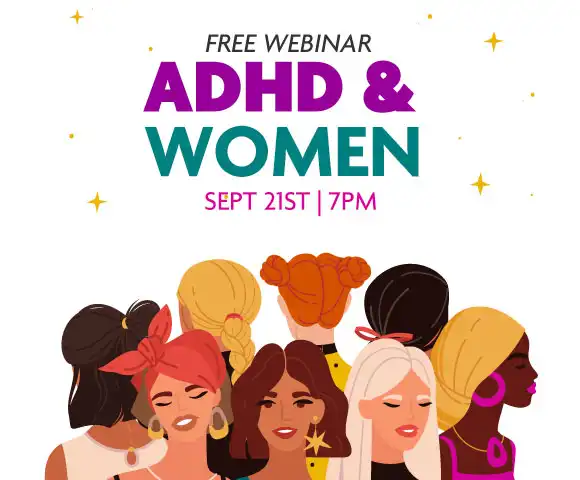
ADHD & Women Webinar
ADHD & Women Webinar
Watch Phil Anderton and Lisa Mangle discuss ADHD & Women in our latest webinar.
Topics Covered:
- How ADHD symptoms present differently in girls and women.
- Why women are often misdiagnosed.
- How your menstrual cycle may be affecting your symptoms and treatment.
ADHD360 mobile & desktop App
Keep yourself and your clinical team up to date with your ADHD symptoms and includes many useful tools.

Key Takeaways
- ✓ Overcoming Primary Care Barriers: When consulting a GP, bring structured screening evidence such as the 18-item Adult Self-Report Scale (ASRS) alongside childhood evidence (e.g., school reports highlighting concentration or social struggles) to facilitate referrals within short consultation times.
- ✓ Misdiagnosis & Co-Occurring Conditions: Approximately 75% of adult female ADHD patients present with prior diagnoses of anxiety or depression. Optimizing ADHD treatment resolves these symptoms in 90% of cases, demonstrating that anxiety and depression are frequently secondary to untreated ADHD.
- ✓ Hormonal Impact & Situational Titration: Estrogen drops during the luteal phase (the week prior to menstruation) can severely worsen ADHD symptoms. Situational titration—adjusting medication dosage during specific weeks of the cycle—provides comprehensive, month-long symptom control.
- ✓ Internalized Hyperactivity Presentation: Hyperactivity in women often manifests internally as a racing mind (analogous to multiple open browser tabs) or body-focused fidgeting (skin picking, nail biting, hair twirling) rather than classic overt physical restlessness.
- ✓ Heritability & Clinical Comorbidities: ADHD has an estimated 80% heritability rate across families and strongly correlates with Hypermobile Ehlers-Danlos Syndrome (hEDS) and disordered/binge eating, both of which respond positively to targeted ADHD care.
Webinar Transcript
Navigating Primary Care and Referral Barriers
Phil Anderson: Welcome everyone to this ADHD 360 webinar on ADHD and women. My name is Phil Anderson from ADHD 360, and I am joined by Lisa Mangle, our Clinical Director, as well as Kristen from Disrupt Marketing in the background. Gender inequality in assessment, diagnosis, and treatment between men and women, boys and girls, has been a core focus for us since founding ADHD 360.
Primary care consultations present unique challenges for women. Patients often face resistance or dismissal due to historical misunderstandings in general practice.
Lisa Mangle: As a clinician assessing patients daily—about 90% of whom are currently female—I frequently hear how long it takes for women to have their ADHD recognized. Standard GP appointments last only a few minutes, making it essential to arrive prepared with objective evidence rather than general assertions.
One highly effective tool is the Adult Self-Report Scale (ASRS). It is an 18-item questionnaire that takes roughly 30 seconds to complete. Research indicates that a positive screen on the ASRS carries a 90% predictive accuracy for a formal ADHD diagnosis following a clinical assessment. Bringing a completed ASRS form to your appointment provides immediate, standardized evidence.
Additionally, gathering evidence of childhood symptoms is crucial, as ADHD is a neurodevelopmental condition that must be present during childhood. While full school reports are helpful, brief records, teacher notes, or written statements from relatives or siblings who knew you as a child are also valid.
Phil Anderson: When reviewing childhood school reports, focus on behavioral descriptions rather than searching for the term “ADHD.” Look for phrases such as “struggles to concentrate,” “difficulty focusing,” “blurts out answers,” or “challenges with peer relationships.” Highlighting these indicators creates a clear evidence trail for your doctor.
Diagnostic Nuances: Medical Assessment vs. Psychology
Phil Anderson: A common challenge patients face is being referred for psychological evaluations or receiving alternative labels like Borderline Personality Disorder (BPD). ADHD is a medical and psychiatric neurodevelopmental condition. Diagnostic assessment and pharmacological management fall within medical psychiatry rather than general psychology. While psychological support can be beneficial post-diagnosis, formal diagnosis and medical management require a regulated healthcare provider.
Lisa Mangle: Diagnostic criteria require evidence of childhood symptom onset to distinguish neurodevelopmental ADHD from situational or environmental factors. Many adult women report “curving” or masking their symptoms throughout school—striving to follow rules and avoid standing out, despite internal exhaustion and burnout.
High cognitive ability can also obscure symptoms early in life. Gifted individuals may navigate primary and secondary education with minimal revision, only to experience severe executive dysfunction during A-Levels or university when structural scaffolding disappears.
Furthermore, adult memory gaps regarding childhood are common in untreated ADHD. Clinical interviews utilize semi-structured formats to trigger emotional recall, enabling clinicians to identify childhood impairments even without extensive written documentation.
Resolving Secondary Anxiety, Depression, and Misdiagnoses
Lisa Mangle: Approximately 75% of adult patients present for ADHD evaluations with prior diagnoses of clinical depression, anxiety, or both, often taking SSRIs without significant relief. Once ADHD is accurately diagnosed and treatment is optimized, roughly 90% of these patients no longer experience clinical anxiety or depression.
In these instances, anxiety and mood disruptions are secondary effects of living with unmanaged neurodiversity and chronic burnout, rather than primary serotonin deficiencies. Providing targeted ADHD treatment addresses the underlying executive dysfunction, resolving the secondary psychological distress.
Genetic Heritability and Family Dynamics
Phil Anderson: ADHD carries a strong genetic component. Research identifies key genetic factors contributing to neurodiversity, with an estimated 80% heritability rate within families.
Lisa Mangle: When evaluating adults, we frequently identify similar symptom patterns across multiple generations. Implementing a family-centered approach (“pedigree clinic model”) allows healthcare providers to assess and support parents and children simultaneously. Treating all affected family members significantly improves home environment stability and overall quality of life.
Female Hormones and Premenstrual Symptom Titration
Lisa Mangle: Female sex hormones exert a profound influence on neurodivergent symptoms. Estrogen drops significantly during the luteal phase (the week preceding menstruation), causing a marked decline in dopamine function and a surge in ADHD impairments.
To manage this, clinicians can implement situational titration—adjusting the patient’s medication dosage during the premenstrual week to offset the hormonal drop. Optimizing treatment throughout all four weeks of the cycle prevents cyclical burnout and restores monthly consistency. Unmanaged ADHD severely impairs quality of life, comparable to poorly controlled Type 2 Diabetes; thus, precise hormonal adjustments are essential.
Workplace Accommodations and Access to Work
Phil Anderson: Disclosing ADHD to an employer opens opportunities for reasonable workplace adjustments. Effective strategies include:
• Clear Communication: Receiving clear, written task instructions alongside explicit deadlines.
• Visual Workflow Systems: Utilizing visual workflow systems, such as Kanban boards or project management software (e.g., Monday.com).
• Quiet Workspaces: Securing designated quiet workspaces for focus-intensive tasks.
• Engaging Roles: Structuring roles to include varied, engaging responsibilities rather than repetitive routines.
In the UK, individuals can apply to government initiatives such as Access to Work to receive funding for specialized ADHD coaching and workplace assistive tools.
Internalized Hyperactivity, Hypermobility, and Disordered Eating
Lisa Mangle: Hyperactivity in women and adults frequently presents internally rather than through overt physical restlessness. Internalized hyperactivity manifests as:
• Racing Mind: A racing mind (feeling like 20 browser tabs are open simultaneously).
• Repetitive Behaviors: Body-focused repetitive behaviors, such as skin picking, hair twirling, or nail biting.
• Restlessness: Subtle fidgeting and continuous mental restlessness.
There is also a well-documented clinical link between ADHD and Hypermobile Ehlers-Danlos Syndrome (hEDS) / joint hypermobility, often co-occurring with chronic pain, fibromyalgia, migraines, and irritable bowel syndrome (IBS).
Additionally, disordered eating—specifically binge eating and impulsive grazing—is strongly associated with untreated ADHD. Chronic executive dysfunction and dopamine seeking drive disordered eating patterns. Optimizing ADHD treatment regulates impulse control, calms intrusive food thoughts, and fosters a healthy, structured relationship with nutrition.
Core Lifestyle Foundations for Symptom Management
Phil Anderson: While pharmacological treatment is often central to managing ADHD, establishing solid lifestyle foundations supports long-term stability. Key areas include:
• Sleep Hygiene: Maintaining strict bedroom boundaries (reserved exclusively for sleep and rest) and removing electronic screens hours before bedtime.
• Regular Physical Activity: Engaging in routine exercise to enhance dopamine regulation and reduce anxiety.
• Nutritional Structure: Planning regular, nutrient-dense meals to sustain physical energy and executive focus.